

ASSESSMENT OF CSR REPORTING
Fondation Guilé is convinced that corporate extra-financial reporting is a driver of change, externally as well as internally. It has the potential to enhance stakeholders’ perception of a company, and to build trust. It is now acknowledged that CSR reporting acts as a stimulus for internal development and has a positive impact on business decisions and outcomes.
The Guilé Engagement Team has developed the GuiléReportingAssessment™ methodology since 2006, to provide an external view of the quality and comprehensiveness of a company’s CSR reporting. This analysis produces immediate benefits by identifying the strengths and weaknesses of the CSR disclosure and implementation, in particular:
– identification of information gaps with regard to the universal Global Compact principles
– exploration of areas for improvement to further develop CSR practices.
Evaluation
TWO DIMENSIONS: COMPREHENSIVENESS & QUALITY
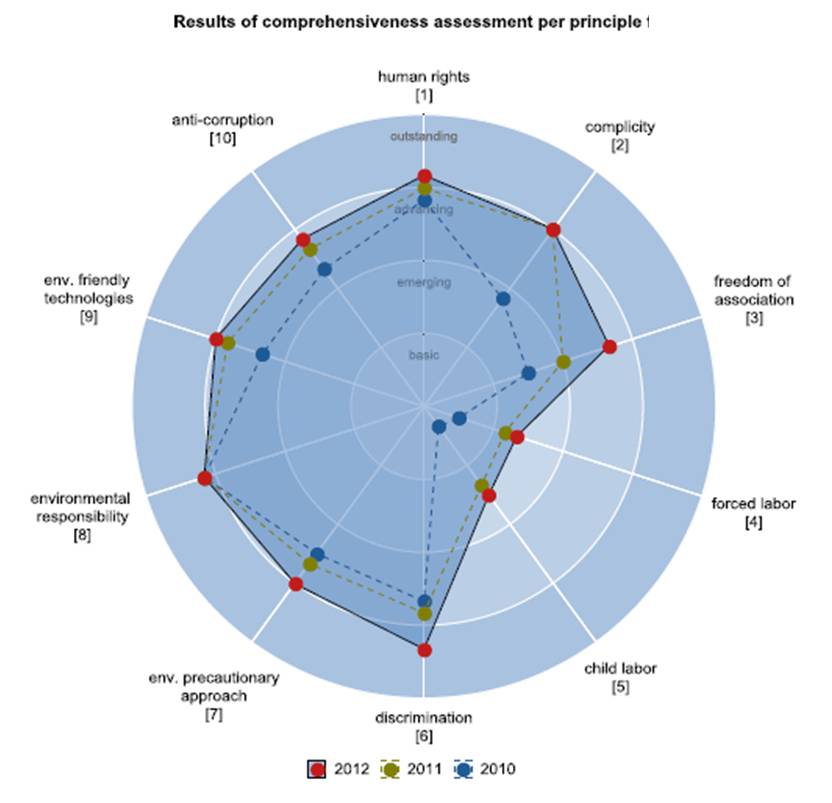
The first dimension deals with COMPREHENSIVENESS: how well the reporting describes a company’s status of implementation of the four issue areas of the Global Compact (human rights; ILO core labour standards; the environment; anti-corruption).
Depending on the information found, a company’s performance is rated as ‘basic’, ’emerging’, ‘advancing’, or ‘outstanding’ on each of the ten principles.
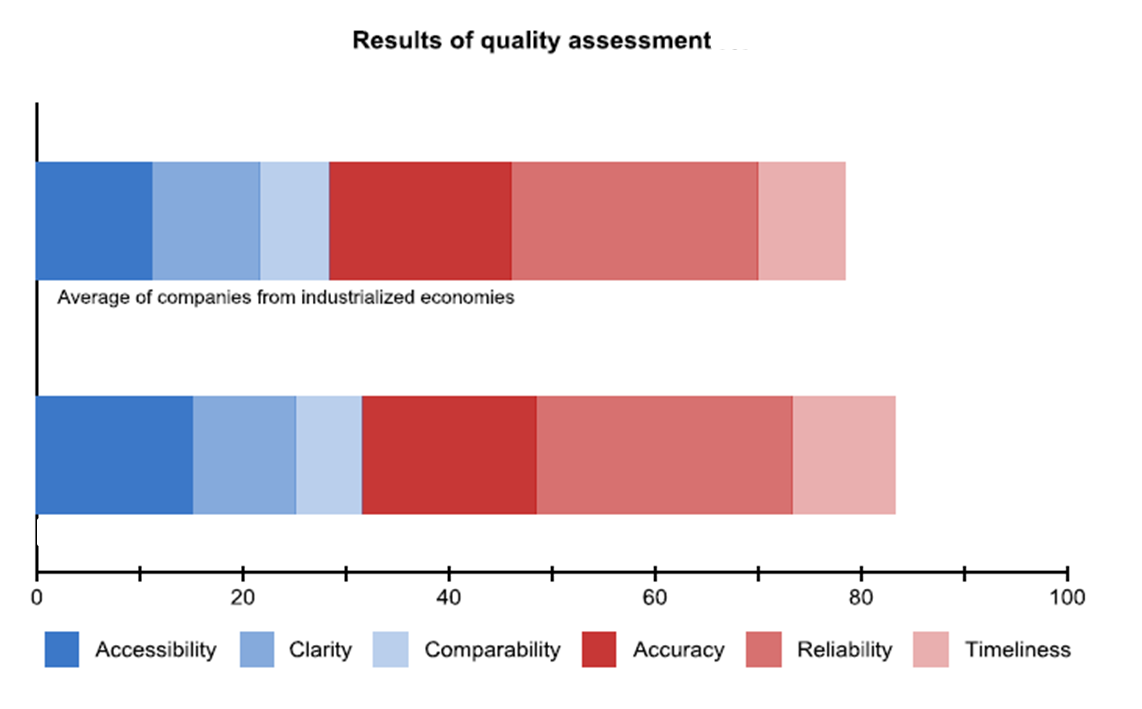
The QUALITY dimension focuses on applied reporting practices that are crucial for ensuring a credible and accurate disclosure.
BENCHMARKING – A GLOBAL PICTURE
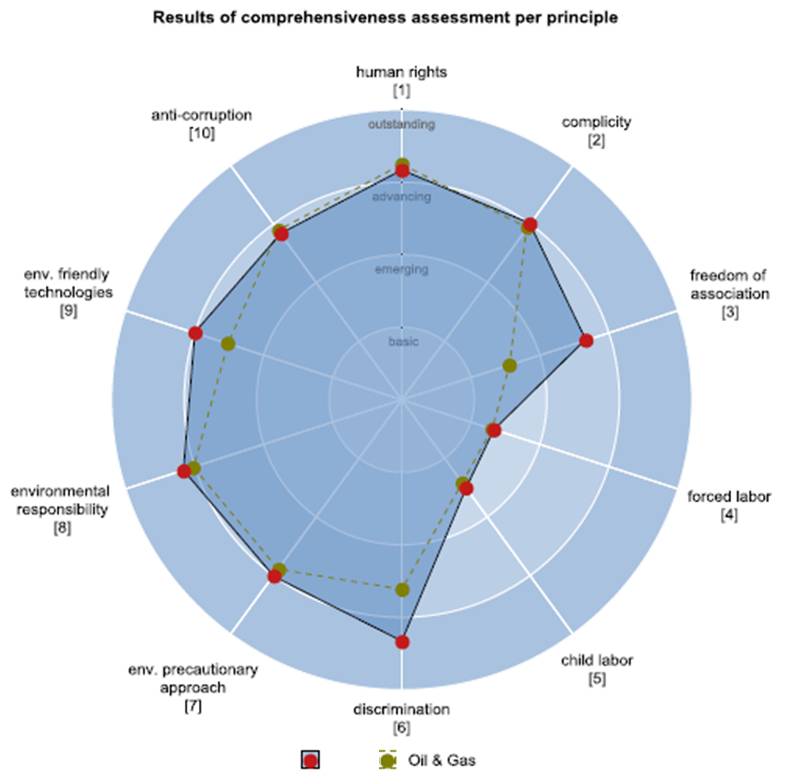
The assessment results may be benchmarked against peer companies, sectors, companies within the same country or region.
IMPROVING THE IMPLEMENTATION OF SUSTAINABILITY OVER TIME
The Guilé assessment is aimed at identifying strengths and weaknesses and offers valuable perspectives for further improving a company’s implementation of and reporting on sustainability.
No matter its size or its countries of operation, every company has room for improvement in achieving its Corporate Responsibility goals. For this reason, Fondation Guilé offers its GuiléReportingAssessment™ system to all companies interested in receiving our analysis which is:
a) completely neutral and extremely exhaustive
b) based exclusively on public information disclosure
c) a mirror of a company’s current capacity to report on its extra-financial challenges management strategy
d) proposed at cost price because we are a nonprofit foundation.
FLYER about the GuiléReportingAssessmentTM